
Is It Possible I'm Addicted to This Smartwatch?

There's a building tension. I can see the cold breath emanating from my rivals as they execute the "starting line" wiggle on the beginning point.
A rapid flick of the hips.
I'm participating in my local weekly parkrun event and I'm serious. It's almost time...
Wait a second. I need to sort my tracker. As does the person beside me.
The person in the line sighs. I refuse to go until… there! Connection established, and I'm running.
Amidst the crowd, it's hard to spot a person without a fitness tracker on it. And this extends beyond us participants who rely on them.
This is a thriving, multi-billion dollar market. Companies like Garmin dominate, each with an wide selection of various devices to cater to a spectrum of needs. Based on how high tech the watch you go for, prices can range from £100 to thousands of pounds.
"It makes me crazy, it's impossible to stop checking."
"It provides solace… It's like a friend supporting me."
"I wish it wouldn't say about a restless night."
A handful of the reactions I've received from other tracker enthusiasts when I inquire what they their opinion is on theirs.
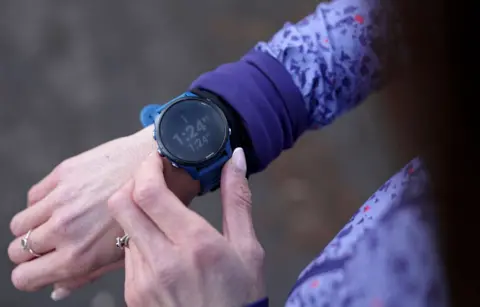
The Data Dilemma
My feelings on mine? Right now, irritating. It's reporting I'm off pace, causing me to question whether the overhead branches I'm running below are blocking my satellite signal.
A vast number of us fasten these small monitors onto our wrists and use them 24/7, apparently unconcerned with the fact they're perpetually recording us.
A distant memory are the days when we relied on them solely to give us an rough count of our step count. Now, they can track our sleep patterns, stress levels, glucose levels, our VO2 max.
It's a challenge to find a health indicator they don't track.
But do they do what they say they do? And are the numbers we scrutinise a true reflection of reality? Do they boost our daily wellness, or do the plethora of metrics and cheerleading alerts just increase our daily stresses?

A Love-Hate Relationship
"I do get a bit preoccupied with mine," one user admits.
While she appreciates how her device records her runs, she finds some of its other features "excessive" at times - a feeling initially realised during a pregnancy.
Before she realised she could put it into a specific mode, her smartwatch constantly alerted her she was not being energetic enough. Later on, the watch insists her she's had a poor sleep score.
"I have a infant, it's unnecessary for me to be told I'm tired," she says. "I know that perfectly well."
Why doesn't she just stop wearing it?
"I suppose I could, I suppose, but I have this complicated dynamic with it," she says. "I appreciate it for its workout tracking, I just wonder whether the myriad other functions it can now do is possibly too much for me."
How Do They Work?
Each model of smartwatch has its own unique way of monitoring your health metrics and interpreting your data, but the vast bulk use detectors on the back of the watch.
They typically emit small, green LED lights onto your skin which can detect blood flow, recording your pulse rate. Higher-end devices detect changes in the skin conductance that flows through the skin to gauge your nervous system activity.
The Professional Viewpoint
A professor says that for most people for smartwatches, it's a "difficult line" - while the continuously improving tech could potentially save lives, "detecting disease before we feel unwell", it could also turn us watch wearers into the "worried well".
He points out that some of the latest wearables can perform tests like heart rhythm analysis, which continuously monitor how healthy the heart is. They can alert if someone is experiencing an irregular rhythm, where there is irregular signals in the heart causing an uneven pulse.
This does not mean someone is about to have a cardiac event, but it can give an advance notice they might be more vulnerable of a stroke in the long term.
But how to interpret these readings is not straightforward. The expert worries that as further capabilities are added, people may find it hard to fully contextualise their data.
"I have some doubts that being able to monitor so many things is such a positive development," he says.
A professor specialising in cardiology agrees. Her work into the influence of wearable tech on a set of heart condition patients suggested a noticeable percentage of those who were given devices to monitor their heart health experienced heightened worry and were "more inclined to use healthcare resources".
She noted a vicious circle with her patients - they spotted a worrying figure on their watch. They grew concerned. Their heart rate increased. They got increasingly anxious. They looked a second time, and their anxiety went up again.
"Upon viewing stats about ourselves that we don't really understand then, understandably, we are going to become concerned," the psychologist says. "We monitor, we re-check - it becomes a feedback loop."

